
After three post-pandemic years of an upcycle, it was a mixed bag for the realty sector in 2025, with sales volumes in the residential real estate moderating across top cities, and commercial real estate and institutional investments emerging as standout performers. Residential: Volumes soften, value holds firm.

Ask rediffGURU and PF and MF expert Janak Patel your mutual fund and personal finance-related questions.

Billionbrains Garage Ventures, the parent company of stock broking firm Groww, on Thursday fixed a price band of Rs 95-100 per share for its upcoming Initial Public Offering (IPO), targeting a valuation of over Rs 61,700 crore (about $7 billion). The company's Rs 6,632 crore IPO would open for public subscription on November 4 and conclude on November 7, according to a public announcement.

Inflows into equity mutual fund (MF) schemes declined in May, logging their lowest tally in 13 months at Rs 19,013 crore. It came even as the gross systematic investment plan (SIP) inflows surged to a record high of Rs 26,688 crore.

Markets regulator Sebi has ordered the attachment of bank accounts and shares and mutual fund holdings of absconding diamantaire Mehul Choksi to recover dues totalling Rs 2.1 crore in a case of violation of insider trading rules in the shares of Gitanjali Gems.

In the Indian stock market, investors are interested in the actions of both domestic and foreign institutional investors (FIIs and DIIs). These groups have wealth as well as expertise in research, which makes them powerful participants in the Indian stock market. Their buy and sell positions have a large effect on stock prices and market sentiment due to the large volume.

The improving outlook for the power sector has caught the interest of dividend yield funds. In the first four months of the current financial year (2023-24, or FY24), five of the six largest dividend yield funds have shown a notable increase in their exposure to stocks within the power sector. Some have even introduced new stocks to their portfolios.

Here's how to own your dream home without paying excessive interest on your EMIs.

'Reinvention is not a hugely difficult task. With technology as available today, you can reinvent yourself pretty quickly.'

Is the parabolic rise in silver running out of steam or just getting started? Ramalingam Kalirajan offers his take on if you should invest in silver now?

Mutual funds are a powerful tool for building wealth, but do they work overnight? Successful investing requires discipline, patience, and a long-term vision, avers Ramalingam Kalirajan.

Paytm's parent company One97 Communications president and chief operating officer Bhavesh Gupta has resigned from the company, an official statement said on Saturday. As part of a change in leadership structure, fintech firm Paytm has appointed Rakesh Singh as chief executive officer of Paytm Money.

The United States, which entered this war in expectation of a short, sharp win along the Venezuela model, is now preparing for deeper involvement in a conflict it does not fully control, without the allies it typically relies on, against an adversary that is not behaving as expected, in a global environment that is already absorbing economic shock. Prem Panicker continues his must read daily blog on the Gulf War.

In India, index funds are found wanting in both aspects -- long-term performance and cost efficiencies.

Arbitrage funds, the new favourite of individual investors, delivered their best performance in nearly a decade in 2024. On average, the schemes delivered 8 per cent return last year, the highest since 2016, according to data from Value Research. The returns were supported by positive equity market sentiments, surge in open interest in stock futures, high interest rate, among other factors, analysts said.

The majority of active largecap funds are set to outperform for the second year in a row in 2024, thanks to the strong performance of their midcap and smallcap allocations.

Ask rediffGURU and PF and MF expert Janak Patel your mutual fund and personal finance-related questions.

When star mutual fund managers quit their jobs to start their own ventures, they have often begun their new innings by becoming portfolio management service (PMS) providers. Over the years there has been an influx of fund managers - they could earn big if they succeeded on their own - and alongside there are wealthy clients looking for an edge beyond that offered by traditional mutual funds.

The Securities and Exchange Board of India (Sebi) on Monday proposed relaxations for asset management companies (AMCs) to serve pooled non-broad-based funds, giving an opportunity to fund houses to expand their business.

The ideal time to invest in sector funds, is during a downturn so that investors can capitalise on a turnaround in 1.5 to 2 years.

Front-running is a fraudulent practice where traders exploit advance knowledge of large client orders for personal profit.

The interplay between domestic and foreign capital will shape India's equity markets.

MNC funds invest in companies where foreign promoters have more than 50 per cent shareholding.
Anil Dhirubhai Ambani group firm Reliance Mutual Fund retains its position as the country's largest fund house having assets of over Rs 48,000 crore (Rs 480 billion).

HDFC Asset Management Company (HDFC AMC) reported a healthy profit after tax (PAT) of Rs 430 crore for the July-September quarter (Q2) of financial year 2023-24 (FY24). It rose 20.2 per cent year-on-year (Y-o-Y) and decreased 8.4 per cent quarter-on-quarter (Q-o-Q). This was driven by good equity returns, leading to a sequential improvement in revenue yields.

Ramalingam Kalirajan explains the pros and cons of both investment types.
Conservative industry estimates place the cash component of mutual fund houses at Rs 25,000 crore (Rs 250 billion). Fund houses had up to 15 per cent in cash, as per the April 30 figures. The cash component exceeded 15 per cent in as many as 30 diversified equity growth funds.

High energy costs, long a drag on India's manufacturing competitiveness, are finally easing. Power and fuel expenses accounted for 1.98 per cent of net sales in 2024-25, the lowest level in data compiled by the Centre for Monitoring Indian Economy (CMIE) over the past two decades.

Index funds and exchange-traded funds (ETFs) have added a record number of investment accounts in 2024, buoyed by the sectoral and thematic investing euphoria that has spilled into the passive space.

Mutual funds (MFs) have lined up information technology (IT) funds, indicating that technology stocks are back on fund managers' radar after a hiatus. Over the past 18 months, stock prices for companies in the software space have either corrected or remained subdued. Fund houses have launched five IT-based sectoral funds in the past three months, with three of them taking the passive route.

Ask rediffGURU and PF expert Milind Vadjikar your insurance, stocks, mutual fund and personal finance-related questions.

'From a risk-return perspective, large-cap funds may generate lower-than-historical average returns in 2024, whereas mid-, and small-cap funds hardly have any upside left.'
Following the sharp run in markets, valuations across the board have become elevated. The National Stock Exchange Nifty50 Index now trades at a 12-month trailing price-to-earnings (P/E) multiple of 24.3 times, 18 per cent higher than this year's low of 20.5 times. The valuation expansion in the broader markets has been sharper.

'Arbitrage funds make the most sense for those in the 30 per cent tax bracket, are viable for those in the 20 per cent bracket, but less so for those in the 10 per cent bracket.'

Promoters' ownership in private listed companies declined to an eight-year low of 40.58 per cent as of June 30, 2025, following a net share sale worth Rs 54,732 crore during the quarter, according to data from primeinfobase.com, an initiative of PRIME Database Group.
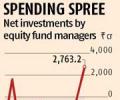
Though the sum was nowhere close to the big-ticket monthly purchases seen during the 2004-2008 bull run, it is significant, as it confirms the reversal of a selling spree that began in September 2013.

Let's Make Savings As Exciting As Spending. This World Savings Day, rediffGURUS Nitin Narkhede, Milind Vadjikar and Ramalingam Kalirajan are all set to answer your queries on savings and investments.
